School Building
  • X
  • LinkedIn
  • School Building Publications
  • Press Submission Form
  • Contact
  • Download Media Pack
  • Subscribe
  • Home
  • Menu Menu
News

The Common Assessment Standard from CHAS: What you need to know

CHAS, Managing Director Ian McKinnon


The rollout of a new data-sharing agreement between the Common Assessment Standard providers means the benefits of qualifying for and specifying the scheme are greater than ever. CHAS, Managing Director Ian McKinnon explains more.


What is the Common Assessment Standard?

Since its launch in 2019, the Common Assessment Standard has fast become the construction industry’s gold standard for prequalification.

Led by Build UK, with the support of CECA, the scheme has been designed to replace multiple assessment schemes with one comprehensive industry-agreed questionnaire, based on existing prequalification questionnaires, including PAS 91.

Previously the PQ system was complex and repetitive, with an estimated 180,000 specialist contractors required to produce over two million pieces of paper every year for 5,000 contractors at a cost of up to £1 billion.

The Common Assessment Standard cuts through this inefficiency while helping the industry manage risk across a wider range of criteria such as sustainability, modern slavery and financial performance.


Who specifies the Common Assessment Standard?

As the Common Assessment standard is resetting a long-established system, a phased approach is being taken to its rollout. This allows companies to adopt the Common Assessment Standard at a time that suits them; however, it has already gained strong support from both the public and private sectors. The Crown Commercial Service (CCS) requires that contractors appointed to its seven-year framework assess their supply chains using the Common Assessment Standard, and it is expected to feature in the details of the Government’s new Construction Playbook. The Construction Leadership Council (CLC) also supports the scheme.

Many major contractors have also moved swiftly to specifying the new standard, with this figure expected to rise now that the data-sharing agreement is in place.


What’s the relevance of the data-sharing agreement?

CHAS was the first accreditation body to offer the Common Assessment Standard in 2019 via the CHAS Premier package. Although contractors could now take the assessment with other approved assessment bodies, the data-sharing agreement means the details of everyone who passes the assessment can be accessed via any of the providers, regardless of which assessment body carries out the audit. For CHAS contractors, this means they only need to complete the Common Assessment Standard once a year with CHAS to qualify for a wide range of work rather than having to sign up to multiple schemes – saving time and money.

Meanwhile, clients looking for pre-qualified contractors simply specify the Common Assessment Standard to find contractors accredited to a single, consistent industry-agreed standard. Clients can access a database of these contractors via the services of any of the assessment bodies – such as the free CHAS Client Portal.


Why choose CHAS?

As well as being the founder of third party accreditation and a trusted authority on supply chain risk management, CHAS is renowned for providing a friendly and efficient service and high customer satisfaction levels.

CHAS contractors receive additional benefits such as access to e-learning resources, discounted fuel and shopping schemes and business insurance. CHAS is also committed to helping contractors who are not yet ready to complete the Common Assessment Standard to work towards higher levels of accreditation.

Meanwhile, it is free, quick and easy for clients to sign up to the CHAS Client Portal where they will also find a suite of complimentary supply chain management and procurement tools.


How can you find out more?

To find out more about qualifying for, or specifying, the Common Assessment Standard, visit www.chas.co.uk or call 0345 521 9111
 

April 15, 2021/0 Comments/by Lyn
https://schoolbuilding.org.uk/wp-content/uploads/2021/04/CHAS.png 320 800 Lyn https://schoolbuilding.org.uk/wp-content/uploads/2019/06/Screenshot-2019-06-10-at-11.25.53.png Lyn2021-04-15 10:00:522021-04-22 10:50:23The Common Assessment Standard from CHAS: What you need to know
Latest News, News

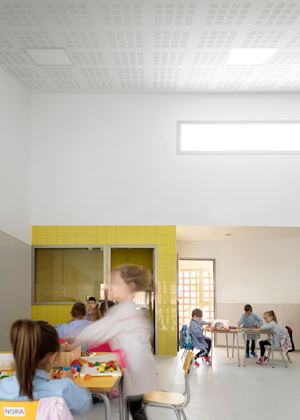
The Design of Education Spaces

The ongoing pandemic has been a disruption to the everyday routines of billions around the world, as due to being confined to their households, the separation between work and rest has become extremely blurry, with people forced to rethink and reconfigure the layout of their personal spaces. Conversations have abounded on how to create flexible working spaces in a home environment, and if offices themselves are an outdated model that we should leave behind. A missing part of that conversation, however, is the impact that the pandemic has had on children, specifically primary-school level children, on their education – as inequalities are emphasized, some children learning with slow internet connection speeds, or struggling to have the space required to adequately complete educational activities.

With early-education schools playing a vital part in the social and emotional development of children, the design of their interior spaces are just as important as the design of the exterior itself, as a majority of time being spent learning inside the building. As architects in a post-pandemic world go on to design early educational buildings, apt attention should be paid to the interior design of the educational spaces – which have a psychological impact on how a child learns. The following are selected interior design features on what makes a calming, welcoming, and dynamic educational space, with corresponding architectural projects selected which contain those features.


High Ceilings

The Children’s School by Salas Arquitectura + Diseño in Cariñena, Spain, contains high ceilings which in turn are also able to bring in a lot of natural light. Rooms with high ceilings enable learners to pay more attention and facilitate a better learning environment than with enclosed spaces – which can increase the stress hormone.


Closeness to nature

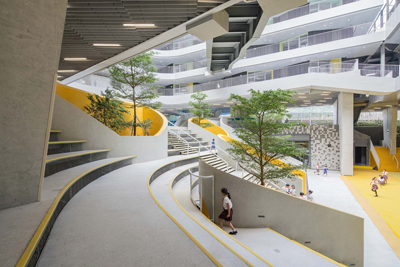
Studies show that incorporating plants in the classroom improves the grades of middle school students – and makes students and staff feel more comfortable, regardless of their age. O-office Architects’ Hongling Experimental Primary School contains greenery interspersed within its campus, providing for a welcome presence of nature amidst the interior design of the building.

Natural Light

A Pattern Language, the seminal book by Emeritus Profesor of Architecture at UC Berkeley, Christopher Alexander – mentions the fact that low light levels in classrooms affected students’ ability to regulate the body’s natural cycle of sleep and arousal. The Community Primary School for Girls in Keheme, Sierra Leone, designed by Orkidstudio, achieves this with the presence of large openings in the wall coupled with the presence of a raised roof, which in addition to providing ventilation also allows the classrooms to be light-filled, inviting spaces.

Flexibility

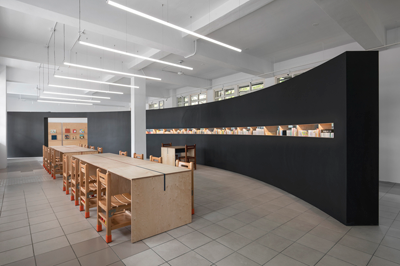
As with coworking spaces, students also benefit from open, fluid classroom layouts. The ability to move furniture around and create spaces that accommodate different types of learning provides a flexible environment to suit the needs of various students at various times. Lan-Tian Elementary School by Studio In2 contains a curved wall that provides the dual function of both privacy for the interior side and book storage on the exterior side of the room. The Hongling Experimental Primary School, mentioned earlier, contains drum-shaped plans which allow for multiple configurations of the classrooms.


Written by Matthew Maganga architecture student at the University of Kent


Source: ArchDaily

March 29, 2021/0 Comments/by Lyn
https://schoolbuilding.org.uk/wp-content/uploads/2021/03/SB-4-28.03.21-1.png 320 800 Lyn https://schoolbuilding.org.uk/wp-content/uploads/2019/06/Screenshot-2019-06-10-at-11.25.53.png Lyn2021-03-29 12:40:502021-03-29 13:50:23The Design of Education Spaces
Latest News, News

Derbyshire School Rising from the Ashes

Artist’s impression of how the new Ravensdale Infant and Nursery School will look (Image: Lungfish Architects)


The design for a new £8 million Derby school to replace the previous one destroyed in an arson attack last October have been revealed.

It includes areas for outdoor learning and also more energy-efficient features within the school building.

A planning application for Ravensdale Infant and Nursery School, in Mickleover, has been submitted to the city council with the aim that the rebuild will be completed by April/May 2022.

The new school will site on the footprint of the old school, which has now been demolished and pupils are attending classes at other venues in the city.

The design and access statement says that the building will be split into two sections joined by a link corridor, with the main entrance, hall, and administration area to the north east facing the shared access road.

And there will be a separate area to the south along the eastern half of the site, which includes the infant and nursery classrooms, toilets and group spaces.

Natural light and ventilation feature throughout the building and LED lighting, automatic lighting controls and daylight dimming will be used to make the building more energy efficient.

External hard play and paths have been retained where possible and an existing car park reconfigured with additional cycle racks.

Areas of hard standing with external canopies will be provided direct from each classroom to suit direct outdoor learning that can be utilised in all weather.


To the south of the site, it is proposed to maintain some existing hard standing and areas of habitat and planting the school has developed as part of their forest school ethos and area of soft informal grassed area.

It is not possible to give final costs at this stage, but it is expected that the overall new build cost will be in the region of £8,045,000.

The recovery plan for the school has four overlapping phases.

These include the demolition of the damaged school and temporary arrangements on the school site for pupils, a partial return to the school site for nursery and one year group.

It also includes relocation to a second temporary site for all other children, which will be at the new Castleward Primary School from September this year and a return for all pupils into the new school in 2022.


Derbyshire Fire and Rescue Service was unable to contain the fire and the majority of the building and most of the contents were lost in the blaze which took place on early on Monday, October 5.

Police are still investigating the fire at the school.


The planning application is expected to be decided within the next eight to 12 weeks.

Source: Derbyshirelive

March 9, 2021/0 Comments/by Lyn
https://schoolbuilding.org.uk/wp-content/uploads/2021/03/SB-1-09.03.21.jpg 320 800 Lyn https://schoolbuilding.org.uk/wp-content/uploads/2019/06/Screenshot-2019-06-10-at-11.25.53.png Lyn2021-03-09 09:45:492021-03-09 09:45:49Derbyshire School Rising from the Ashes
News

VIRTUAL INSPIRATION FOR TOMORROW’S ARCHITECTS, TODAY

Leading architecture practice GT3 Architects has launched an innovative virtual work experience for students interested in design and the built environment but unable to undertake studio placements due to Covid-19.

The work experience, which is aimed at students aged 14-18, will last for five working days (typically Monday to Friday), and will be conducted via Microsoft Teams. Students will be asked to deliver their own design project, specialising in one of three potential career paths: architecture, interior design and graphic design. 

Guided by specialist professionals within the multi-disciplinary practice, GT3 Architects hopes it will highlight the different routes into a creative career within the built environment.

Judith Atkinson, Project Architect “When I was 15 I did a week’s work experience in an architects’ office”

Judith Atkinson, project architect at GT3 said: “We’re delighted to launch our virtual work experience and hopefully inspire the next generation of architects. We know this has been an extremely difficult academic year for students undertaking their GCSEs and A-Levels and we hope that this experience will help them make informed choices about their career.

“When I was 15 I did a week’s work experience in an architects’ office, which confirmed my suspicions that architecture was the career for me. I really enjoyed being part of the office, even just for the week; I loved the work they did and the atmosphere of the place.

“17 years later I am now a project architect at GT3 working on exciting projects with a brilliant and supportive group of people.”

The first half of the work experience will concentrate on the content of an exhibition, centred around their own interests, and students will meet the team and learn more about the design process. The latter half of the week allows the student to develop this project using their chosen design stream, developing an architectural project (designing the building), an interiors project (designing the space), or a graphics project (designing the collateral).

Students will be introduced to relevant members of GT3, who will share their own experience and best tips. The week will also be filled with ‘practice tasks’, designed to introduce students to office culture, such as attending meetings, and will include an hour-long career talk with a GT3 professional from a discipline of their choice.

Liz Clarke, people champion at GT3 Architects, added: “By inviting students to share a week with us we hope to encourage, inform and inspire the next generation of design professionals. As a practice we care about developing the next generation of designers and we’ve always endeavoured to foster an engaging environment for our work experience students.

“Inviting students in has big benefits for us too, as we hear fresh ideas and unique inputs into the design projects so we can’t wait to virtually host our first students!”

GT3 Architects is an award-winning architecture practice with studios in Nottingham and Newcastle. The people focused firm champions an inclusive, sustainable, and engaging way of doing business that positions people at the heart of every project.

For further information visit www.gt3architects.com or join the conversation over on Twitter @_GT3Architects


March 1, 2021/0 Comments/by Lyn
https://schoolbuilding.org.uk/wp-content/uploads/2021/03/GT3-Architects_Work-Experience-1.jpg 320 800 Lyn https://schoolbuilding.org.uk/wp-content/uploads/2019/06/Screenshot-2019-06-10-at-11.25.53.png Lyn2021-03-01 16:02:562021-03-01 16:02:56VIRTUAL INSPIRATION FOR TOMORROW’S ARCHITECTS, TODAY
News, Windows

A WINDOW OF OPPORTUNITY

The benefits of replacement, energy-efficient aluminium windows and doors for school renovations include savings on energy bills while providing a bright, secure and comfortable learning environment explains Russell Wallbank, Architectural Project Manager at window and door system supplier Schüco.


A pool of water on a window sill or a blind flapping in a cold draft are the tell-tale signs that a window has reached the end of its life. While you may not need an expert to tell you a window has failed, it is worth talking to an expert when it comes to selecting the best value product for its replacement. Often, a school will employ a building surveyor to assess the problem. They will then contact a window and door system supplier, such as Schüco, for advice on the most appropriate and cost-effective replacement.

A reputable supplier will select the most suitable product from their range. This may involve visiting the school, writing a specification for the job, producing preliminary window drawings and even recommending an approved fabricator and installer.

One concern often raised is whether planning permission is needed when replacing a failed window or external door. Generally, planning permission is not required, providing the aesthetics are not being changed significantly and the replacement window and door’s thermal performance is equal to or better than the unit it is replacing.

While planning permission may not be required, replacement windows and doors must comply with current Building Regulations, which apply to the unit’s thermal performance and other areas such as safety, air supply, means of escape and ventilation.

A big advantage of using a leading system supplier like Schüco is that a school will benefit from a quality, cost effective solution. For example, it is good practice to ensure the new window provides at least the same amount of natural light as the one it is replacing because high levels of natural light reduce the need for electric light, saving energy, while aiding students’ concentration.


Ventilation too is important. Additional opening units can often be added without significantly changing a window’s appearance. Window systems can also incorporate passive or active ventilation to ensure outside air can always enter the classroom, even with the windows closed.

Furthermore, where solar gains are likely to cause overheating, the glazing can be treated with a heat-reflective coating. Or, if the budget and the planners allow, you can also install other methods of solar control offered by Schüco, such as external louvre blades or brise soleil.

Often the best solution is to replace failed windows and doors with units made using a thermally-broken aluminium frame and energy efficient double glazed units, such as Schüco AWS 70 SC. These will have a significantly better thermal performance to improve classroom comfort in both summer and winter while helping reduce the school’s heating bill.

When replacing external doors, particularly in high traffic areas, these will need to be robust and high quality units, such as the Schüco GFT 50 entrance system. Replacement doors may need to comply with the Equalities Act 2010, which means they should have a low threshold and be wide enough to allow wheelchair access. It is worth pointing out that, should an external door opening need to be widened, planning permission may be required.

Replacement fire exit doors need to be secure yet easy to open in an emergency. Door hardware therefore needs to be positioned so as to ensure ease of operation. In fact, all windows and doors should be fitted with high security hinges and locks complying with Publicly Available Specification 24 (PAS 24) or with Secured by Design.

Schüco offers the seamless integration of door and window systems for schools. For example, the AWS 70 SC window system can be combined with the Schüco GFT 50 external door system for high traffic areas which includes an anti-finger trap solution.


For more information on Schüco systems visit the website, email mkinfobox@schueco.com or call 01908 282111 and ask for Russell Wallbank.

www.schueco.com/uk

February 5, 2021/0 Comments/by Lyn
https://schoolbuilding.org.uk/wp-content/uploads/2021/02/SCHUCO.png 320 800 Lyn https://schoolbuilding.org.uk/wp-content/uploads/2019/06/Screenshot-2019-06-10-at-11.25.53.png Lyn2021-02-05 13:59:342021-02-10 10:10:30A WINDOW OF OPPORTUNITY
Latest News, News

DISCREET BUT EFFECTIVE VENTILATION

Photo courtesy of Aberystwyth University


Vectaire’s Microbox 125/2DC MEVs were chosen to ventilate the new, en-suite student rooms in the refurbished Grade 11 Listed Pantycelyn Hall of Residence at Aberystwyth University.

This prestigious project required discreet, but effective ventilation (now even more essential to control the spread of COVID-19).  The Microbox, provides this.  It is a low energy product which runs continuously, quietly and efficiently,  extracting pollutants and controlling condensation.  This in-line unit is slim (less than 184 mm deep) so is particularly suited for installation where space is at a premium.  It is easy to install, requires only one discharge grille and uses the minimum amount of ductwork (therefore fewer fire dampers and less coring),   There is a variable choice of low (trickle), boost and purge speeds at installation.  It is IPX4 rated, SAP PCDB Listed and UK manufactured.


Follow us on Twitter            Join us on Linked in  


December 7, 2020/0 Comments/by Lyn
https://schoolbuilding.org.uk/wp-content/uploads/2020/12/vectair.jpg 300 800 Lyn https://schoolbuilding.org.uk/wp-content/uploads/2019/06/Screenshot-2019-06-10-at-11.25.53.png Lyn2020-12-07 12:56:092020-12-07 12:56:09DISCREET BUT EFFECTIVE VENTILATION
Latest News, News

County Councils biggest construction project to date

Pictured cutting the first turf at the new Haverfordwest High VC School site is Cllr Guy Woodham, Cabinet Member for Education and Lifelong Learning.

Construction has officially begun on Pembrokeshire County Council’s biggest construction project to date.

A ‘Turf-Cutting’ ceremony was held on November 26, at the construction site for the new Haverfordwest High VC School in Prendergast.

Held to mark the formal start of construction works, the traditional ceremony is thought to bring luck to the £48.7m project, which is being funded jointly by Pembrokeshire County Council and the Welsh Government as part of the 21st Century Schools & Colleges Programme.

The new school building, on the former Sir Thomas Picton School site, is due for completion in the summer of 2022.

The new-build will accommodate 1500 pupils aged 11-16 and 250 sixth form pupils.

Clr. Guy Woodham, Pembrokeshire County Council Cabinet Member for Education and Lifelong Learning, said: “Today is a landmark in the development of Haverfordwest High VC School.

“It is a timely reminder that through the 21st Century Schools & Colleges Programme with Welsh Government we are investing in the future of our learners and our community.

“All our learners deserve the best provision we can provide with the £48.7m investment. I am grateful that we have been able to keep this significant project on track during the pandemic. We look forward to welcoming learners on to the new school site in September 2022.”


New sports facilities at the school will include an eight-court sports hall, a full-size floodlit 3G pitch, and two multi-use games areas. All will be available for community use outside school hours.

The existing athletics track, all-weather pitch and grass pitches will be retained.

Most traffic, including school buses, will enter the site via a new access road currently being built off the A40, which will lead directly to a coach parking zone and a new car park for staff and visitors.

Rob Williams, Area Director for contractors Morgan Sindall Construction, said: “We are delighted to have begun work on the main building for the new Haverfordwest High VC School, an ambitious project which will deliver a modern learning campus and exceptional sports facilities to the local community.

“Despite disruptions caused by the Covid-19 pandemic, we have worked hard to bring the project to site safely and the completion date remains the same; ensuring that demand for school-places within the area can be met without delay.

“We are grateful to Pembrokeshire County Council and all of our project partners for helping us to reach this exciting milestone, and look forward to seeing the finished building.”

Haverfordwest High VC School Chair of Governors, Paul Lucas, added: “From the plans provided, this promises to be an imposing example of educational building excellence which accords with up to date environmental and planning requirements.

“It is now up to the Governors, Head Teacher and staff to turn these facilities and opportunities into a first class educational learning area of distinction.

“Our thanks go to Morgan Sindall and their partners for the tremendous thought put into the project so far, and we must not forget the other interested parties – the Head, staff and of course the school council of pupils who have all put long hours into shaping our educational future in Haverfordwest.

“Thanks also go to Pembrokeshire County Council and the Education Department – as the project client – for listening to us and providing for our needs so that we can show what we really can do in this school of the future.

“We simply cannot wait to move in and are delighted that despite the poor hand of cards 2020 has dealt us, the project remains on track. Well done to all.”


Source: Tenby Observer

Follow us on Twitter            Join us on Linked in  

December 4, 2020/0 Comments/by Lyn
https://schoolbuilding.org.uk/wp-content/uploads/2020/12/SB2.jpg 300 800 Lyn https://schoolbuilding.org.uk/wp-content/uploads/2019/06/Screenshot-2019-06-10-at-11.25.53.png Lyn2020-12-04 11:20:002020-12-04 11:20:00County Councils biggest construction project to date
Flooring, News

RAISING THE PAR FOR THE UNIVERSITY OF ST ANDREWS

An array of Forbo Flooring Systems products has been installed within the University of St Andrews’ newest student accommodation building, to help deliver a contemporary and high-end aesthetic that would enhance the students’ experience. The final design resulted in HLM Architects being commended in the 2019/20 Fly Forbo competition.

 Located within the University of St Andrews’ North Haugh Campus, Powell Hall was developed to provide 205 new bedrooms, as well as high-quality common spaces, as part of the largest expansion of accommodation in St Andrews for over a decade.

Keen to offer an exceptional student experience, The University of St Andrews wanted the new accommodation to have its own unique look and feel. Mhairi-Claire Wilkes, Interior Designer at HLM Architects, explains: “The number of international students is increasing, and their expectations for academic living are not limited to the four walls of the bedroom. Instead they desire a higher quality of hospitality. They want a space to meet people, collaborate, learn and play; spaces that will enhance their social living experience, while supporting and improving their academic and personal growth.”

With this in mind, the University selected Campus Living Villages as its joint venture development partner and HLM architects to provide its architectural and interior design services.

To meet the University’s brief, HLM Architects developed a variety of social, formal and informal spaces for students to collaborate and study in, all of which featured unique lighting and furniture, as well as bespoke colour palettes that reflected the University’s branding, which were expressed through the soft furnishings and feature paint.

Mhairi-Claire continued: “When it came to selecting materials and colours for the project, we ensured that they reflected the University’s heritage and complemented its existing buildings. However, to make this building unique, we decided that each floor would have its own colour palette, to not only provide some identity to those that use the building, but to also help with wayfinding. We managed to achieve this through the specification of the floor coverings.

“As we have a strong relationship with Kay Kerr at Forbo, we knew we would receive excellent help on the project.”

Within the formal, reflective learning areas, which were designed for students that wished to engage in individual work quietly, HLM Architects opted to install Forbo’s Tessera Diffusion carpet tiles, thanks to its soft aesthetics. Forrest trail, a brown earthy tone was specified for the first floor; Arctic Voyage, which has a soft light blue hue, was installed on the second floor, and Magnetic flux, a charcoal grey, was chosen for the third floor

Mhairi-Claire continued: “Within the informal spaces, where the students would interact and socialise, we chose Tessera Layout Planks in the colourways Mono and Plasmatron – both of which have complementing grey and black hues running throughout. We also had a bespoke Library Red developed by Forbo specifically for this project, to represent the University’s colours.

“When we originally chose the planks, we were unsure on how to use them at first. However, with help from Kay, we decided to install them in an almost Tetris style pattern and it looks great! To be honest, I think it is one of the most successful finishes that we have had on this project; we really like the combination of the grey and black tones, combined with the vibrant pops of red.”

Throughout the corridors, HLM Architects specified Forbo’s Sarlon acoustic vinyl floor covering in the colourway Steel, to mimic the architectural concrete featured on the outside of the building. Chosen for its acoustic properties, the Sarlon range has been developed to provide 19dB impact sound reduction – perfect for this project where hundreds of students will use the space at the same time.

“At the entrance area of the building, Kay recommended that we used Forbo’s Coral entrance flooring system to remove the soil and moisture from shoes and wheel treads, to protect the interior floor coverings,” commented Mhairi-Claire. “Coral Duo in Luna pearl was chosen as it is aesthetically pleasing and complemented the Tessera Layout planks perfectly, thanks to its grey and black design.”

Forbo’s Coral Duo is the ultimate dirt and moisture remover. It is the ideal solution for areas that require maximum dirt removal, unrivalled dirt retention and exceptional moisture absorption, all in just a couple of paces. In fact, research has shown that Coral Duo retains 10% more dirt in the first few metres than any other textile entrance flooring solution on the market. HLM Architects also chose to install Novilon Classic in all of the communal kitchen areas to provide a more homely and warming atmosphere.

For more information about Forbo’s solutions for student accommodation, please visit www.forbo-flooring.co.uk/education or to pre-register for the 2020/21 Fly Forbo competition visit www.forbo-flooring.co.uk/flyforbo


Follow us on Twitter

Join us on Linked in

November 30, 2020/0 Comments/by Lyn
https://schoolbuilding.org.uk/wp-content/uploads/2020/11/FORBO1.jpg 300 800 Lyn https://schoolbuilding.org.uk/wp-content/uploads/2019/06/Screenshot-2019-06-10-at-11.25.53.png Lyn2020-11-30 13:25:432020-11-30 13:25:43RAISING THE PAR FOR THE UNIVERSITY OF ST ANDREWS
Latest News, News

Winchester University ‘Ups’ its Green Credentials

The U.K. is home to some of the world’s oldest — and most prestigious — universities. And while these may be centers of excellence for learning, many institutions’ buildings were built centuries ago and are in need of refurbishment or, in some instances, total replacement.

It’s a problem that’s not restricted to higher education. Across the country, a lot of building stock is old and not as energy efficient as it should be.

Victorian-era housing, for example, can be draughty and costly to maintain, while office blocks developed even 20 years ago can often feel tired and out of date.

In the south of England, one place of learning is attempting to boost its green credentials with a brand new development.

Earlier this week, construction firm Osborne “formally handed over” the West Downs Centre to the University of Winchester. A handover refers to a contractor formally passing a development over to their client.

The building boasts a number of sustainable features designed to boost its green credentials. These include a combined heat and power system; solar photovoltaic panels; rainwater recycling; and what the university described as “smart building management.”

Its development was supported by green financing through a £30 million ($37.26 million) loan from Triodos Bank, which offers what it describes as “sustainable financial products.”

The university has previously described the West Downs Centre as being “on target” for an “excellent” BREEAM rating. BREEAM is a “sustainability assessment method” from the Building Research Establishment that covers infrastructure, masterplanning projects and buildings.

It’s hoped that teaching at the building could begin in September this year, although given the current situation with regards to the coronavirus pandemic, this is dependent on government advice. An official opening and inauguration are slated for next year.

Around the world, buildings designed for the education sector are being developed with sustainability in mind.

In March of this year, it was announced that the firm Veidekke had been tasked by the city of Oslo to build an energy-efficient, solar-paneled school.

At the time Veidekke said the Voldsløkka secondary school would have solar panels on its facades and roof. In addition, machinery used on the building site would run on “fossil-free fuel.”

Back in the U.K., a number of universities are also turning to renewable sources of energy. These include the University of Sussex, which has installed over 3,000 solar panels at its campus in a £1.5 million initiative.

Elsewhere, the University of Nottingham has said its “recent new builds” include things such as biomass boilers, green roofs and passive design.

Source: CNBC


June 19, 2020/0 Comments/by Lyn
https://schoolbuilding.org.uk/wp-content/uploads/2020/06/SB-NEWS-19.06.20-3-1.jpg 300 500 Lyn https://schoolbuilding.org.uk/wp-content/uploads/2019/06/Screenshot-2019-06-10-at-11.25.53.png Lyn2020-06-19 11:25:362020-06-19 11:25:52Winchester University ‘Ups’ its Green Credentials
News

Performance plus bollards meet Secure by Design

The challenge

EKO Pathways is a special educational needs primary and secondary school based in East Ham, London, which caters for children and young people with social, emotional and mental health difficulties (SEMH).

Five years ago, London Borough of Newham joined forces with architects Rivington Street Studio to build a brand-new secondary school on a brownfield site.

The new building was to provide generous, flexible classrooms and specialist teaching resource areas, calming spaces and break-out areas in the extensive external landscape. A sympathetic external lighting design was required to help meet the buildings objectives.

Key project requirements

  • Enhance the appearance of the building and provide sufficient light to the walkways using a ‘secure by design’ approach
  • Use LED to save energy and provide longer maintenance periods
  • Controlled using both dusk to dawn sensors and time switches
  • Fully compliant with BS 7671
  • Prevent light pollution
  • Emergency 3-hour battery back-up lighting to be provided to satisfy the requirements of BS 5266


The solution

The final lighting scheme consists of Red Dot award winning, Ren Performance Plus 4000K bollards for the walkways, spaced at an average of 10 – 12M apart.

While Kirium Pro 1 4000K luminaires, on 6M Telford Columns, were selected for the general area and car park lighting.

Ren delivers a low energy (336lm) exceptionally uniform lighting solution in an architecturally centric form – clean and unfussy – complementary to the new modern school building.

Its comfortable, ambient light providing enhanced vertical illumination for facial recognition, overcoming the low performance sometimes expected with bollard lighting and meeting the requirements of Secure by Design.

Emergency versions provide 3-hour back up lighting satisfying the requirements of BS 5266.

Both luminaires are fitted with dusk to dawn sensors and time switch controls which turn them on/off during set times to prevent unwanted wasted light; with light pollution prevented through precision optics directing light to where needed; with minimal upward light.


David Tucker, Director, Rivington Street Studios comments, “Ren provides subtle route wayfinding within a robust context. Its flat-screen optical system, with an additional area of diffused light, represents a real innovative solution over existing bollards.”

Featured products

Ren Performance Plus

Kirium Pro 1


www.dwwindsor.com

February 24, 2020/by Lyn
https://schoolbuilding.org.uk/wp-content/uploads/2020/02/DW-Windsor_EKO-Pathway-School_PR-web.jpg 300 500 Lyn https://schoolbuilding.org.uk/wp-content/uploads/2019/06/Screenshot-2019-06-10-at-11.25.53.png Lyn2020-02-24 13:35:462020-02-24 13:35:46Performance plus bollards meet Secure by Design
Page 11 of 12«‹9101112›

Categories

© Copyright School Building powered by Blue Sky Hosts Ltd | You may read our privacy policy *here*
Scroll to top

This site uses cookies. By continuing to browse the site, you are agreeing to our use of cookies.

OKLearn more

Cookie and Privacy Settings


How we use cookies

We may request cookies to be set on your device. We use cookies to let us know when you visit our websites, how you interact with us, to enrich your user experience, and to customize your relationship with our website.

Click on the different category headings to find out more. You can also change some of your preferences. Note that blocking some types of cookies may impact your experience on our websites and the services we are able to offer.

Essential Website Cookies

These cookies are strictly necessary to provide you with services available through our website and to use some of its features.

Because these cookies are strictly necessary to deliver the website, refusing them will have impact how our site functions. You always can block or delete cookies by changing your browser settings and force blocking all cookies on this website. But this will always prompt you to accept/refuse cookies when revisiting our site.

We fully respect if you want to refuse cookies but to avoid asking you again and again kindly allow us to store a cookie for that. You are free to opt out any time or opt in for other cookies to get a better experience. If you refuse cookies we will remove all set cookies in our domain.

We provide you with a list of stored cookies on your computer in our domain so you can check what we stored. Due to security reasons we are not able to show or modify cookies from other domains. You can check these in your browser security settings.

Other external services

We also use different external services like Google Webfonts, Google Maps, and external Video providers. Since these providers may collect personal data like your IP address we allow you to block them here. Please be aware that this might heavily reduce the functionality and appearance of our site. Changes will take effect once you reload the page.

Google Webfont Settings:

Google Map Settings:

Google reCaptcha Settings:

Vimeo and Youtube video embeds:

Privacy Policy

You can read about our cookies and privacy settings in detail on our Privacy Policy Page.

Privacy Policy