

Fire safety in schools is about much more than alarms, extinguishers and evacuation drills. Schools are complex buildings containing hundreds sometimes thousands of pupils and staff, alongside kitchens, laboratories, electrical equipment, plant rooms, IT infrastructure and significant amounts of combustible material.
While serious school fires are relatively uncommon, the consequences can be enormous. A major fire can close classrooms, destroy equipment and teaching resources, disrupt exams and force pupils into temporary accommodation for months or even years.
Home Office data continues to record fires within education premises across England, demonstrating why fire prevention and effective fire safety management must remain an important part of managing the school estate.
For school leaders, estates managers, facilities teams and those responsible for the design and maintenance of educational buildings, the challenge is therefore not simply responding to a fire. It is reducing the chances of one starting and ensuring the building can protect its occupants if one does.
What are the fire safety requirements for schools?
Schools in England are required to assess the fire risks within their premises and put appropriate precautions in place.
Department for Education guidance states that existing schools must undertake fire risk assessments to identify the precautions needed to protect occupants and provide a safe means of escape. Fire risk assessments should also be kept up to date, particularly when significant alterations are made to the premises.
A school’s approach to fire safety should therefore consider the building as a whole rather than treating individual pieces of fire protection equipment in isolation.
This includes fire detection and alarms, emergency lighting, escape routes, compartmentation, fire doors, evacuation procedures, staff training, firefighting equipment and the management of potential ignition and fuel sources.
The Department for Education also recommends that schools consider reviewing their fire risk assessment annually, or at least every three years, with additional reviews where changes to the premises or its use could affect the assessment.
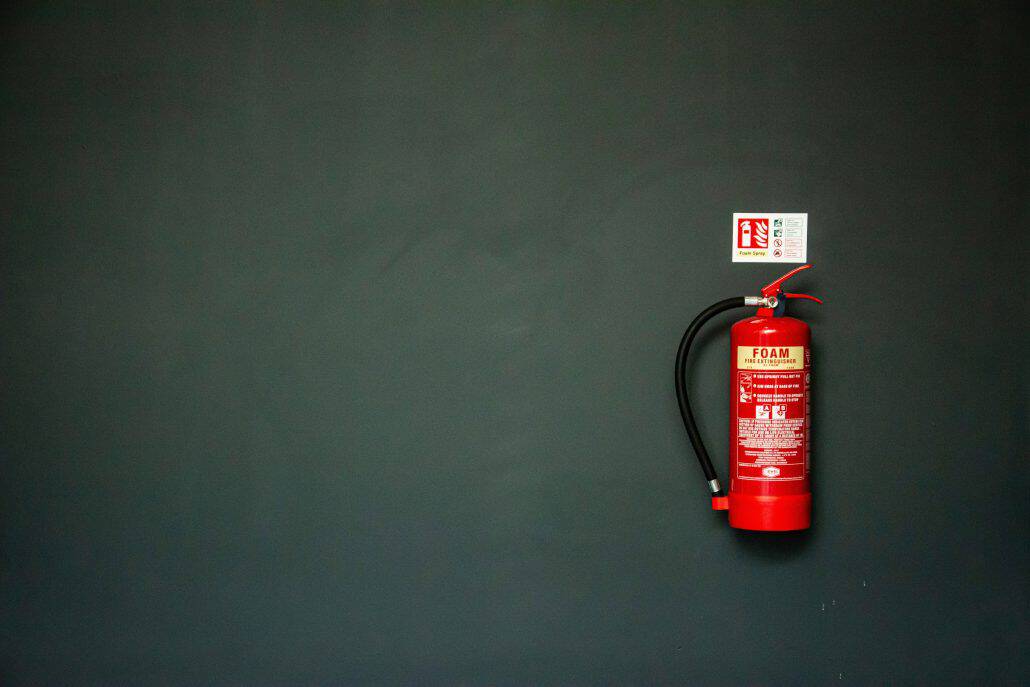
Keep fire detection and alarm systems maintained
Early detection is critical in any education building.
Schools can be particularly challenging environments because different parts of the building may have very different risk profiles. A classroom, commercial kitchen, science laboratory, plant room and sports hall all present different considerations.
Fire detection and alarm systems therefore need to remain properly maintained and routinely tested.
Current government estate management guidance recommends a weekly alarm test. Where a system contains several manual call points, schools should rotate the call point being tested so that all are eventually included. Systems should also receive appropriate inspections and testing by a competent person.
Testing should be recorded so that schools have a clear maintenance history and faults can be addressed quickly.
Fire doors in schools are a critical line of defence
One area of fire safety in schools that can easily be overlooked is the condition of the school’s fire doors.
A fire door is not simply a heavier version of a normal door. When installed correctly and kept closed, it forms part of the building’s fire compartmentation and is designed to restrict the movement of fire and smoke.
This can help keep corridors, stairways and other escape routes usable for longer while pupils and staff evacuate.
Department for Education guidance describes fire doors as playing an important role in containing fire, smoke and toxic fumes within a compartment for a defined period. Many school fire doors may provide around 30 minutes of fire resistance, although doors with higher ratings can be required in areas presenting a greater fire risk.
These higher-risk areas can include plant rooms, electrical intake rooms, kitchens, science and technology laboratories, chemical or fuel storage areas and stores containing PE mats.
However, a fire door only works properly if the complete doorset is correctly installed and maintained.
Government guidance says fire door inspections in schools should look at whether:
- self-closing devices operate correctly
- automatic hold-open devices release when the fire alarm activates
- glazing remains intact
- doors and frames are free from significant damage or distortion
- intumescent strips and smoke seals are present and undamaged
- hinges and locks remain in suitable condition
- appropriate fire door signage is displayed
- doors open and close freely
- fire doors are not being wedged or propped open
Fire doors should remain in efficient working order and be regularly checked and maintained by a competent person, with maintenance records retained.
In busy schools, this is particularly important. Doors may be opened hundreds of times during a normal day and can suffer damage from trolleys, equipment, pupils and everyday wear.
A damaged closer, missing seal or door that no longer closes properly might seem like a minor maintenance issue, but it could compromise part of the school’s fire protection strategy.
Never prop open a fire door
It is one of the simplest fire safety mistakes and one of the easiest to prevent.
A heavy self-closing door in a busy school can be inconvenient, particularly where staff and pupils frequently move between classrooms. This sometimes results in doors being held open with wedges, chairs or other objects.
Doing so can prevent the door performing the job it was installed to do.
If a fire door needs to remain open for operational reasons, an appropriate approved hold-open device linked to the fire alarm system may be required so that the door automatically closes when an alarm is activated.
Government guidance specifically identifies ensuring that fire doors are not propped open by staff or pupils as part of school fire door inspections.
Consider the role of sprinklers
Automatic sprinkler systems can help control a developing fire before it becomes a major incident.
This can be particularly valuable when school buildings are empty overnight, at weekends or during school holidays when a fire might otherwise develop for longer before being detected or tackled.
For new school buildings, fire safety needs to be considered as an integral part of the building’s design. Building work at schools must comply with the relevant Building Regulations, with Building Bulletin 100 providing guidance for fire safety design in schools.
Whether suppression systems are required will depend on the particular project, building design and fire strategy rather than schools relying on a single approach for every building.
Reduce the risk of arson
Deliberate fire-setting has historically been an important consideration for schools, making security and estate management part of the wider fire prevention strategy.
Schools can reduce opportunities for arson by considering how easily someone can enter the site, where combustible materials are stored and whether bins, waste or other materials could be ignited close to a building.
Good external housekeeping is particularly important outside normal school hours.
Waste containers should, where possible, be secured and positioned appropriately. Storage sheds and other combustible materials should also be considered as part of the school’s overall fire risk assessment.
Lighting, CCTV, fencing, access control and general site security may all contribute to reducing opportunities for deliberate fires, but these measures need to form part of a wider risk-based approach.
Store combustible materials safely
Schools naturally accumulate combustible material.
Paper, cardboard, displays, teaching materials, furniture and equipment all need somewhere to go, and storage space is often at a premium.
Problems arise when convenient spaces are used without considering the fire risk.
Electrical cupboards, server rooms and areas containing distribution boards should not simply become overflow storage spaces. Combining significant combustible material with potential ignition sources creates an unnecessary risk.
The basic principle is straightforward: wherever possible, keep potential fuel sources away from heat and ignition sources.
Storage must also be managed so it does not obstruct corridors, fire exits or escape routes.
Pay particular attention to PE and gym mat storage
PE equipment is another area that can create unexpected fire risks.
Large quantities of foam-filled gym mats can contribute to fire growth and generate significant smoke if involved in a fire. They therefore need to be stored in an appropriate location rather than simply being placed wherever sufficient space is available.
The school’s fire risk assessment and building fire strategy should consider areas containing substantial combustible loads such as PE stores alongside other higher-risk areas.
Good housekeeping should extend beyond classrooms and corridors into storerooms, cupboards, kitchens, laboratories, plant rooms and external areas.
Keep escape routes clear
When an alarm sounds, pupils and staff need to be able to move quickly towards a place of safety.
Escape routes should therefore remain clear and usable at all times.
This sounds straightforward, but schools are constantly changing environments. Deliveries arrive, furniture moves, displays are installed and equipment is temporarily stored.
What was a completely unobstructed corridor at the start of term can gradually become cluttered.
Schools should routinely inspect escape routes, stairways and final exits rather than relying solely on formal periodic fire risk assessments.
Appropriate emergency signage and escape lighting should also be maintained. Government guidance states that those controlling premises must ensure safe means of escape and recommends that schools regularly test and maintain emergency lighting.
Make sure evacuation plans work for everyone
An evacuation plan needs to account for the actual people using the building.
That includes pupils, teaching staff, contractors, visitors and anyone who may require additional assistance.
Schools should consider whether individuals with mobility, sensory, cognitive or other requirements can safely evacuate using the school’s normal arrangements or whether additional planning is necessary.
Where appropriate, this can include a Personal Emergency Evacuation Plan (PEEP).
Regular drills remain important because even a well-designed emergency procedure is of limited value if pupils and staff do not know what they are expected to do.
Government guidance specifically requires schools to ensure staff and pupils are familiar with emergency evacuation procedures.
Fire safety must form part of everyday school management
Perhaps the most important lesson is that fire safety in schools cannot be treated as an annual compliance exercise.
Buildings change. Doors become damaged. Classrooms are repurposed. Equipment is moved. New electrical devices are installed and storage areas gradually fill.
Fire safety therefore needs to form part of normal estate management.
Regular checks of fire doors, alarms, emergency lighting, escape routes and firefighting equipment can identify relatively minor problems before they become significant risks.
The school’s fire risk assessment should sit at the centre of this process and be reviewed whenever changes to the premises mean the existing assessment may no longer reflect how the building is actually being used.
A well-managed school building should not depend on one fire safety measure alone. Detection, compartmentation, fire doors, evacuation planning, good housekeeping, security and staff awareness all work together.
For schools reviewing their existing arrangements, particularly where buildings are being refurbished or altered, involving an appropriately competent fire safety professional can help ensure the building’s fire strategy and day-to-day management remain aligned.
Ultimately, effective school fire safety is about protecting far more than the building. It protects pupils, staff, educational resources and the continuity of learning that the school exists to provide.