In an era when the UK’s school estate is under intense pressure to deliver net-zero, resilient, and inclusive buildings, one quiet but powerful movement is gaining ground: biophilic design. This is the deliberate integration of nature into the built environment – not as decoration, but as a core architectural strategy that connects children with the natural world every day they are at school. School Building Magazine Editor Joe Bradbury discusses:
While the conversation in school building magazines often centres on funding, RAAC, or modular speed, biophilic design offers something deeper: a way to improve pupil wellbeing, behaviour, and learning outcomes through the very fabric of the building. With fresh 2026 research highlighting that only 24% of UK schools currently provide daily nature experiences (dropping to 18% in deprived areas), the construction industry has a unique opportunity to lead a shift that benefits both people and planet.
The evidence base: why nature matters in schools
The science is no longer emerging – it is established and growing. Decades of international research, reinforced by UK-specific studies, show that exposure to nature reduces stress, improves concentration, boosts creativity, and supports emotional regulation. In educational settings, these effects translate directly into measurable gains.
A landmark review cited in recent BRE work links biophilic elements to lower cortisol levels, better attention restoration, and even improved immune function in children. Closer to home, post-pandemic analyses from University College London and others have shown that views of green space, natural materials, and indoor plants correlate with reduced anxiety, fewer behavioural incidents, and higher attendance. One study found that classrooms with strong biophilic features saw reading and maths improvements of up to 15-20% in some cohorts – echoing but extending the “naturalness” findings of earlier design research.
Crucially, the benefits are most pronounced for vulnerable pupils. In deprived communities where daily nature access is lowest, biophilic school design can act as an equaliser, providing restorative experiences that many children lack at home.
From theory to practice: what biophilic design actually looks like in UK schools
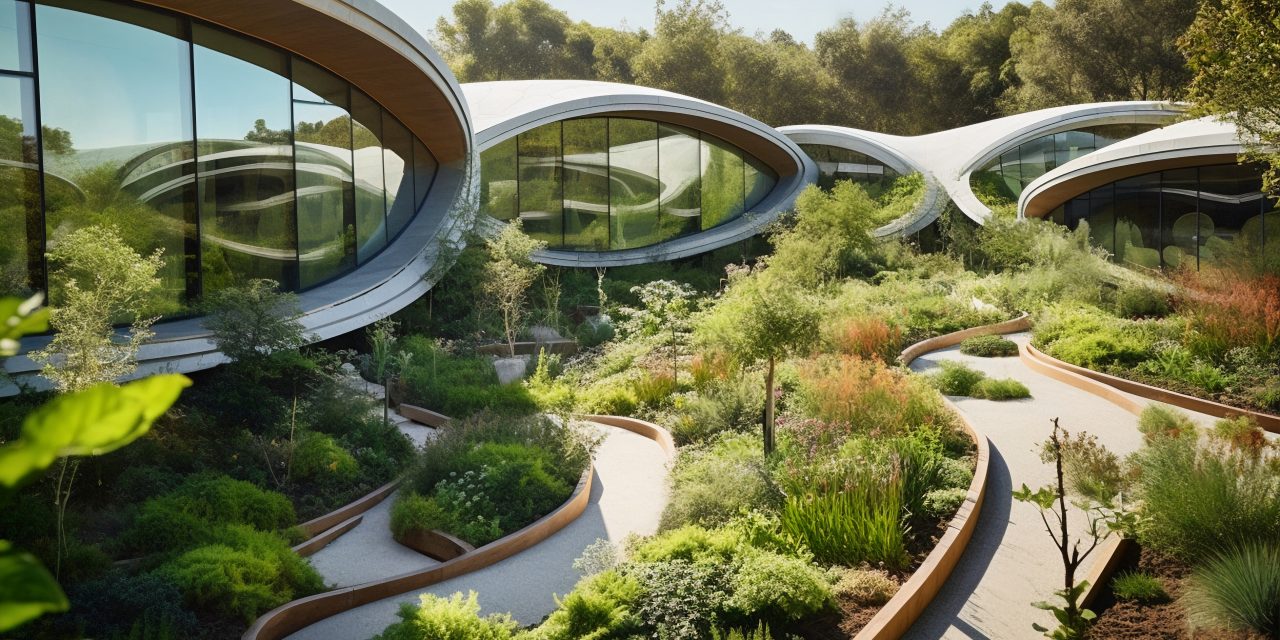
Biophilic design is not about filling corridors with pot plants. It operates on multiple levels: direct nature (plants, water, living walls), indirect nature (natural materials like timber and stone, organic shapes), and space and place (views, light patterns, prospect and refuge).In new-build and retrofit projects, this means:
- Large windows and internal courtyards offering constant views of trees or sky
- Timber cladding, exposed beams, and natural-fibre acoustics instead of sterile surfaces
-
Living walls, green roofs, and biodiverse planting that doubles as outdoor classrooms
- Water features or sensory gardens that engage multiple senses
- Flexible indoor-outdoor thresholds with sliding walls or covered terraces for year-round use
The DfE’s Sustainability and Climate Change Strategy already encourages climate adaptation and biodiversity. Biophilic approaches align perfectly, turning schools into living demonstrations of net-zero principles while delivering wellbeing dividends.
2026 momentum: standardised construction meets nature
A standout development this year is the collaboration between Kier Group and the Building Research Establishment (BRE). Kier, whose kSchool standardised approach has delivered dozens of efficient, modern schools, commissioned BRE in late 2025 to embed biophilic opportunities into the platform. The resulting guidance identifies low-cost, high-impact interventions that can be factory-integrated without disrupting programme or budget.
This is significant. Modular and offsite construction – increasingly dominant in the School Rebuilding Programme – has sometimes been criticised for feeling clinical. By baking biophilic principles into standardised designs, contractors can deliver nature-rich environments at scale, consistently, and cost-effectively. Early adopters report that timber-heavy facades and integrated planting zones add minimal upfront cost while slashing long-term maintenance through natural cooling and improved air quality.
Other contractors are following suit. Bouygues UK has showcased biophilic features at recent projects such as St John’s Academy and Stanmore College, using natural light wells, internal gardens, and textured materials to create calmer, more engaging spaces. These examples prove that biophilia works across both new builds and refurbishments.
The construction challenge – and opportunity
For the industry, shifting to biophilic design requires new thinking but offers clear advantages.
Firstly, supply chain adaptation. Demand for responsibly sourced timber, living wall systems, and biodiverse substrates is rising. Forward-thinking suppliers are already developing modular green-roof kits and acoustic panels made from natural wool or hemp that meet Building Regulations while enhancing biophilic scores.
Secondly, whole-life value. Traditional cost models focus on capital expenditure. Yet biophilic schools show reduced absenteeism, lower staff turnover, and decreased need for expensive behavioural interventions. When whole-life carbon and social value are properly assessed – as the forthcoming UK Net Zero Carbon Building Standard (launched January 2026) encourages – the business case strengthens dramatically.
Thirdly, skills development. Contractors are upskilling teams in biodiverse landscaping, natural material specification, and post-occupancy evaluation of wellbeing metrics. This creates higher-value roles and appeals to younger talent drawn to purposeful construction.
Challenges remain. Legacy sites with limited outdoor space require creative retrofits. Maintenance of living elements needs clear responsibility agreements between schools and contractors. And initial client briefs sometimes still treat biophilia as optional rather than essential.
Community and long-term legacy
Biophilic schools do more than support pupils – they become community assets. Green roofs reduce urban heat islands, biodiverse grounds support local wildlife, and outdoor learning spaces can host adult education, parent groups, or holiday clubs. In a country facing loneliness and disconnection, these buildings act as “third places” where generations reconnect with nature and each other.
The Glyn-coch community hub project in Wales (opened to visitors on site in early 2026) illustrates this perfectly: an ultra-sustainable school designed with extensive outdoor learning terraces and native planting that serves both children and the wider valley community.
Looking ahead: from compliance to regeneration
As the Education Estates Strategy rolls forward with £38 billion of investment, biophilic design offers the industry a chance to move beyond “less bad” buildings to genuinely regenerative ones – environments that actively restore human health and ecological balance.
The next steps are clear. Design teams should embed biophilic principles at RIBA Stage 1, using tools like the Biophilic Design Matrix or BRE guidance. Contractors can differentiate bids by quantifying wellbeing and biodiversity returns. And responsible bodies should demand post-occupancy studies that measure not just energy use but nature connection and pupil flourishing.
The numbers are compelling: only 24% of schools currently offer daily nature access. Through thoughtful construction, we can change that figure dramatically within a decade. In doing so, the UK school building industry will deliver more than modern classrooms – it will create daily sanctuaries of nature that help a generation grow up healthier, happier, and more connected to the living world.
School construction has always been about the future. Biophilic design ensures that future is one where children do not just learn inside buildings – they learn to love and protect the natural world around them.
Source: School Building Magazine
Image Freepik