
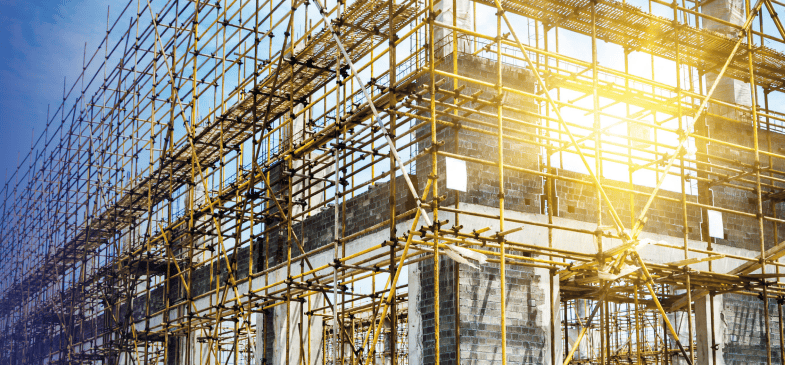
There was a time when a school construction project meant fences, mud, temporary cabins and a lot of apologising to teachers. Entire playgrounds disappeared behind hoardings for two years while pupils learned next to drills and reversing alarms. In 2026, that approach is starting to look outdated. Across the UK education sector, the real challenge is no longer simply building schools. It is rebuilding them while lessons continue uninterrupted. School building Magazine Editor Joe Bradbury discusses how this is delivered.
In many ways, the future of educational construction is less about iconic architecture and more about invisibility — projects delivered faster, quieter and with minimal disruption to learning.
The timing is significant. Britain’s school estate is under enormous pressure. The fallout from the RAAC crisis continues to expose decades of underinvestment, while pupil demand, sustainability targets and SEND provision requirements are all increasing simultaneously. Earlier this year, MPs warned that England’s ageing school estate still requires “permanent solutions” despite progress on RAAC remediation.
What is emerging now is a more industrialised model of educational construction — one built around certainty, speed and operational resilience. And perhaps surprisingly, some of the sector’s most important innovations are happening away from the building site entirely.
Construction that happens somewhere else
Walk past a modern school project today and you may notice something strange: there is less construction happening on site. That is because increasing amounts of educational infrastructure are being manufactured in factories before arriving almost complete. Modular and offsite systems have moved well beyond their old reputation as temporary classrooms. In 2026, they are becoming standard delivery models for mainstream educational projects.
This change is partly practical. Schools are among the most difficult live environments in which to build. Safeguarding restrictions, limited access windows and term-time safety concerns create enormous logistical pressure.
Traditional construction methods struggle in these conditions. Offsite manufacturing does not. Large sections of classrooms, corridors and specialist spaces can now be assembled in controlled factory environments while groundwork takes place simultaneously on site. The result is dramatically shorter programmes and far less disruption to day-to-day teaching. That matters more than ever as schools attempt to manage rebuilding works linked to RAAC remediation and wider estate renewal. Several modular specialists are now openly positioning themselves not simply as builders, but as continuity providers — companies capable of keeping schools operational during large-scale refurbishment and replacement programmes.
The education sector has effectively become a proving ground for industrialised construction in Britain.
The rise of the “invisible” build
One of the most interesting developments in educational construction is that success is increasingly measured by what users do not notice. If a project causes major timetable disruption, noise complaints or safeguarding issues, it is often viewed as a failure regardless of design quality. That has changed the priorities of clients dramatically.
Speed still matters, but predictability matters more. Headteachers and estates teams want programmes they can trust. They want contractors who can work around exams, stagger deliveries around drop-off times and maintain access routes throughout the academic year.
This operational mindset is influencing procurement too. Frameworks are increasingly favouring suppliers capable of delivering standardised quality with reduced risk exposure. Recent additions to public procurement frameworks for modular education buildings reflect this growing emphasis on programme certainty and compliance.
For contractors, this represents a cultural shift as much as a technical one.
The traditional image of construction as a noisy, reactive process is being replaced by something closer to manufacturing logistics.
SEND Provision is changing design priorities
Another major force reshaping educational construction is the rapid expansion of SEND provision. This is not just resulting in more specialist schools. Increasingly, mainstream schools are integrating specialist environments directly into broader campus designs. Sensory spaces, therapy rooms, adaptable classrooms and low-stimulation circulation areas are becoming standard considerations rather than niche additions.
Importantly, the conversation has evolved beyond compliance. Designers are now being asked difficult questions about dignity, inclusivity and emotional wellbeing. How do you create calm environments without segregation? How do you reduce overstimulation in busy secondary schools? How can acoustics, lighting and spatial layout support neurodiverse learners? These questions are influencing everything from corridor widths to material palettes.
Some of the most progressive educational projects now resemble healthcare and hospitality environments as much as traditional schools. Softer acoustics, better daylighting, intuitive wayfinding and biophilic features are becoming more common across the sector.
In many ways, educational construction is becoming more human-centred precisely because the estate crisis exposed how poorly many older buildings functioned for modern teaching needs.
Sustainability is growing up
For years, sustainability conversations in construction often revolved around headline targets and marketing language. In 2026, educational clients are becoming more sceptical and more informed. Schools are now asking tougher questions about operational energy performance, durability and maintenance costs rather than simply chasing environmental badges. This is partly because school buildings are uniquely exposed to long-term operational realities. A poorly performing office might frustrate a facilities manager.
A poorly performing school directly affects concentration, attendance and comfort for hundreds of pupils every day. As a result, educational projects are increasingly focusing on whole-life performance.
That includes improved thermal envelopes, rooftop solar integration, biodiversity measures and more efficient ventilation systems. Recent SEND projects such as Pinn River School in London demonstrate how renewable energy generation and biodiversity targets are now being integrated directly into educational design briefs.
Interestingly, modular construction is also benefiting from this shift.
Factory-controlled production typically creates less material waste and allows tighter quality control around insulation and airtightness. The Modular and Portable Building Association recently launched its own roadmap towards net zero, reflecting how strongly sustainability and industrialised construction are now intertwined.
There is also a growing recognition that sustainability includes resilience. Buildings that can adapt to demographic change, curriculum shifts and future expansion are increasingly valued over highly bespoke structures with limited flexibility.
The politics behind the plasterboard
None of this transformation is happening in isolation from politics.
The school estate conversation remains heavily shaped by the legacy of underinvestment and the continuing fallout from RAAC failures. Parliamentary committees have repeatedly linked the crisis to long-term capital funding pressures and deferred maintenance.
That political backdrop matters because it influences client behaviour. Local authorities and academy trusts are becoming more cautious about risk. They want delivery models that minimise surprises. They want buildings with clearer maintenance strategies. They want systems capable of scaling quickly as further estate issues emerge. This environment naturally favours repeatable construction models and standardised delivery approaches.
In other words, educational construction is becoming less bespoke and more systematic.
For some architects, that may sound worrying. But the reality is more nuanced. The best modern educational projects are proving that standardisation and good design do not have to conflict.
Instead, the sector is slowly learning something manufacturing figured out decades ago; consistency can create quality too.
In summary
The irony of Britain’s educational construction boom is that its most important innovations are often the least visually dramatic. The future school may not look radically different from the outside. There may be no flashy architecture or futuristic gimmicks. But behind the scenes, the way it was delivered could represent a complete transformation.
Built faster. Built cleaner. Built with fewer people on site. Built while lessons continued uninterrupted. And perhaps most importantly, built around the idea that education itself cannot pause simply because the estate is failing.
That may become the defining principle of the next generation of school construction. Not just building schools. But building them without stopping school life at all.