
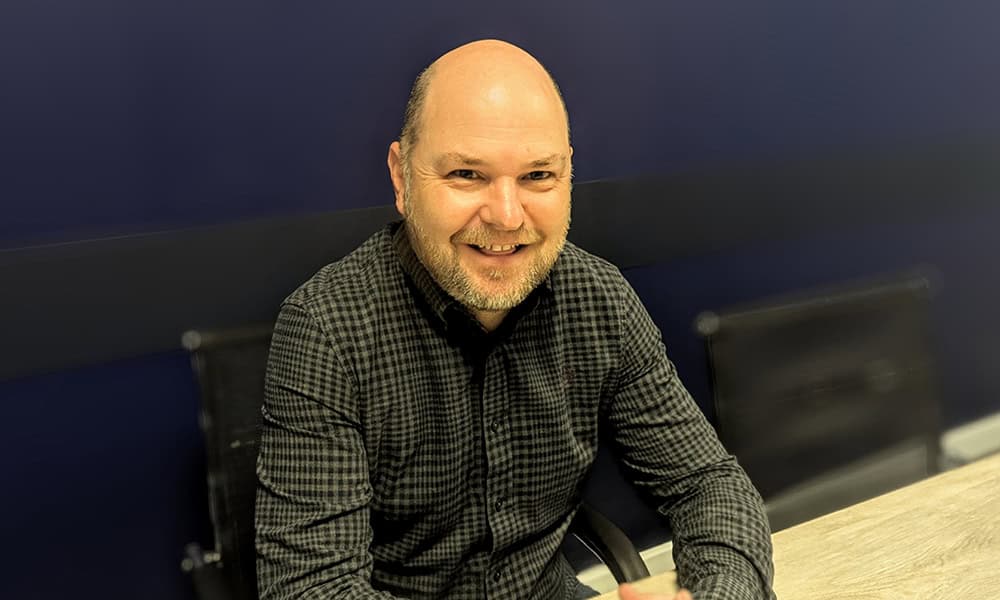
Interview with Premier Modular Head of Pre-Construction, Rental Division, Richard Hook
After 70 years in business, Premier Modular continues to raise the standard for modern construction.
As Premier Modular celebrates its 70th anniversary in 2026, the company is only looking forwards. Demand is growing, manufacturing capacity is expanding, and modular construction is becoming an increasingly favourable solution across education, healthcare, commercial infrastructure and beyond.
A long history
For Richard Hook, Premier Modular’s Head of Pre-Construction, Rental Division, the company’s longevity comes down to consistency. “Premier Modular has been around for 70 years, which is very exciting,” he begins. “Over that period, we have proved our worth as a highly trusted and reliable modular supplier within our industry.”
Founded in 1956, Premier Modular has built its reputation by delivering both temporary and permanent modular buildings through rental and sale options. Working alongside trusted supply chain partners, the company delivers projects across a wide range of sectors, while maintaining the flexibility clients increasingly expect.
Rather than specialising in a single market, Premier Modular has developed expertise across multiple industries. Schools remain a major focus, alongside healthcare, commercial infrastructure and welfare accommodation, giving the business resilience and the ability to respond as demand shifts.
A versatile company
“We’re not pigeonholed in one particular sector,” Richard asserts. “If there are opportunities in a certain market, we can adapt accordingly.”
That breadth is supported by significant manufacturing capability. Operating from a 37-acre facility, Premier Modular continues to invest in production capacity, including introducing night shifts to keep pace with growing demand. Unlike some competitors, the company manufactures its own modular buildings, giving greater control over quality, delivery, and programme certainty.
Customisation creates competitive advantagePremier Modular 2
While speed remains one of modular construction’s greatest strengths, Premier Modular believes flexibility is what truly differentiates its offering.
The company designs modules that can be stacked up to six storeys high, making complex urban projects possible where space is at a premium. Open-span modules without internal columns create larger, more adaptable internal spaces, while bespoke internal fit-outs allow buildings to be configured around each client’s operational requirements.
“We receive what I call ‘shopping lists’ from clients,” Richard says, “and we work from those, fitting a project to the customer’s needs.”
Working with DfE
Premier Modular’s customer-led approach has helped the company secure increasingly large education projects, particularly through Department for Education programmes.
One standout example is Greenshaw High School, where Premier Modular delivered 186 modules as part of what Richard describes as the company’s ‘largest Department for Education decant project to date’. Larger schemes continue to emerge, with enquiries now exceeding 300 modules.
“We’re becoming that trusted partner with not just the Tier One contractors, but the ultimate client, the Department for Education, to provide these modular buildings.”
Speed also proved critical following severe flooding at St Peter’s in Nottingham. After the existing school buildings were condemned, Premier Modular delivered a complete temporary school on what had previously been a muddy field.
“It was literally a grass field site,” says Richard. “We ended up with four buildings and created a brand-new modular village school so pupils could get back into education while the permanent solution was developed.”
The project demonstrated how modular construction can respond rapidly to urgent situations without compromising quality or functionality.
Changing perceptions
Despite modular construction becoming more mainstream, Richard believes outdated perceptions still linger.
Many people continue to associate modular buildings with ageing portable classrooms, yet modern modular construction bears little resemblance to those memories. Advances in manufacturing, materials, and design have transformed both appearance and performance.
“There are still people out there that think of modular as the cold portable cabin they were in at school,” Richard remarks. “Until they’ve stepped into a modern modular building, they don’t realise how far modular construction has come.”
Factory manufacturing delivers several advantages over traditional construction. Buildings are produced in controlled conditions, reducing weather delays while improving consistency and quality. Projects are completed faster, with less disruption on site, while external finishes allow completed buildings to blend seamlessly into their surroundings.
“The quality surprises people,” Richard reports. “Teachers have said they can’t really tell the difference between the modular building and the traditional building.”
Growing awareness is helping modular construction gain wider acceptance across both the public and private sectors, particularly as organisations seek faster, more flexible ways to deliver new facilities.
Inbuilt sustainability Premier Modular 3
At the same time, environmental performance has become a much bigger consideration for clients, and Premier Modular has continued to evolve its offering in kind.
The company has committed to achieving net-zero carbon emissions by 2040, while environmental, social and governance objectives continue to shape investment across the business.
One of the biggest sustainability advantages for Premier Modular lies within the company’s rental fleet. These buildings are designed to be reused repeatedly, extending their lifespan and reducing embodied carbon through a circular approach.
“We build a unit, it’ll go on rental, come back in, we’ll repurpose it, and send it out as a rental again,” Richard reveals.
Alongside reuse, Premier Modular has introduced a growing range of value-added products designed to improve building performance. Solar panels, rainwater harvesting systems, and intelligent energy monitoring are increasingly becoming part of customer specifications.
Smart sockets capable of monitoring electricity use also help organisations reduce unnecessary energy consumption by identifying equipment left running outside working hours.
“It’s getting to the point where these items are paying for themselves,” Richard states.
Beyond the factory
Technology and sustainability will remain priorities for Premier Modular, but Richard believes long-term growth depends just as much on investing in people.
Premier Modular continues to expand across Europe, with projects underway in Milan, Berlin and the Netherlands, while artificial intelligence is also becoming an area of active development.
The organisation operates strong apprenticeship programmes, supports internal progression and continues to develop future leaders through structured training and succession planning. Employees regularly move through different areas of the business, with many progressing from manufacturing roles into office-based positions. Premier Modular delivered more than 12,000 hours of staff training last year, reflecting a long-term commitment to developing in-house expertise.
“We invest in our people,” Richard explains. “As long as we keep investing in our people, we will maintain our growth going forward.”
Recognition continues to follow that approach. Earlier this year, Premier Modular was named Manufacturer of the Year at the 2026 Modular Methods of Construction Awards, reinforcing its position within a rapidly evolving industry.
Now, after 70 years, the company remains focused on what comes next.
Source: https://businessfocusmagazine.com/2026/08/03/premier-modular-building-a-better-tomorrow/