
Schools rely heavily on their electrical systems. From classroom computers and interactive displays to commercial kitchens, science laboratories, workshops, heating systems and emergency lighting, even a relatively small school can have a complex electrical installation.
Keeping that installation safe requires more than reacting when something stops working. Schools and the organisations responsible for their estates need an appropriate programme of inspection, testing and maintenance.
So, how often should electrical installations be tested in schools?
For many non-domestic premises, periodic inspection at intervals of around five years is commonly recommended, and Electrical Safety First recommends periodic inspection at least every five years for businesses. However, schools should not treat five years as a universal legal deadline that applies regardless of circumstances. The appropriate interval depends on the installation, its condition, how it is used and the findings of previous inspections.
What are schools required to do about electrical safety?
The Electricity at Work Regulations 1989 place duties on those responsible for electrical systems to ensure they are constructed and maintained so as to prevent danger.
HSE guidance makes the underlying principle clear: electrical equipment and installations must be maintained to prevent danger, so far as reasonably practicable.
For a school, responsibility may sit with an academy trust, local authority, governing body or another responsible organisation depending on how the estate is managed.
Importantly, electrical compliance is not simply about obtaining a certificate every few years. Inspection should form part of a wider maintenance programme.
The same principle applies across other non-domestic buildings, and this guide to electrical compliance for commercial properties provides further background on some of the responsibilities involved.
What is an EICR?
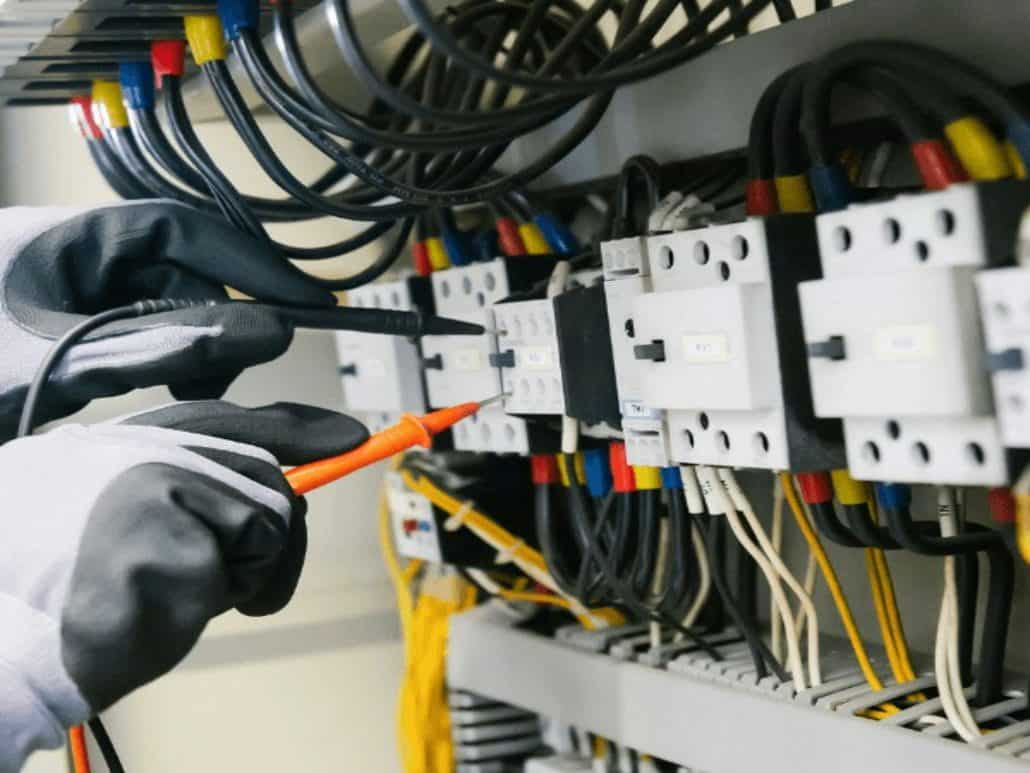
An Electrical Installation Condition Report (EICR) assesses the condition of a building’s fixed electrical installation.
This can include elements such as:
- fixed wiring and circuits
- distribution boards
- earthing and bonding
- protective devices
- sockets, switches and other fixed accessories.
Inspection and testing can identify deterioration, damage, inappropriate alterations and other conditions that could present an electrical safety risk.
An EICR therefore provides schools with a snapshot of the condition of their electrical installation at the time of inspection.
Why some areas of a school may need closer attention
Not every area of a school places the same demands on its electrical installation.
An administrative office, for example, is very different from a design and technology workshop, commercial kitchen or plant room. Science laboratories, workshops, sports facilities, kitchens and external installations may expose electrical equipment to increased levels of heat, moisture, mechanical damage or intensive use.
Schools are also installing more technology than ever before. Charging equipment, interactive screens, heat pumps, solar panels and EV charging infrastructure can all change the demands placed on existing electrical systems.
This is why a risk-based approach is important. HSE similarly advises that inspection and testing frequency for electrical equipment should reflect the equipment itself, the environment in which it is used and previous inspection results.
Electrical Safety and Fire Risk in Schools
Electrical safety is also an important part of a school’s wider fire prevention strategy. Damaged wiring, overloaded circuits, faulty equipment and poorly maintained electrical installations can all increase fire risk, particularly in areas such as kitchens, laboratories, plant rooms, server rooms and electrical cupboards. Schools should therefore consider electrical inspection alongside fire alarms, emergency lighting, fire doors and other preventative measures rather than treating each area of compliance separately.
Good housekeeping matters too. Electrical cupboards and areas containing distribution boards should be kept clear of unnecessary combustible materials, while faults such as overheating, repeated tripping or damaged electrical accessories should be investigated promptly. For a broader look at how schools can reduce fire risks across their estates, read our guide to fire safety in schools, covering fire detection, fire doors, emergency lighting, escape routes and ongoing fire safety management
What happens during an electrical inspection?
An inspection will normally consider the condition and safety of the fixed installation and involve appropriate electrical testing. The inspector may review previous documentation, visually examine parts of the installation, carry out tests and identify deterioration or potentially unsafe conditions. The findings are then recorded within the EICR.
Schools wanting a broader understanding of the process can also read this overview of electrical inspection and testing. The completed report will normally classify any observations according to their severity.
What happens if a school receives an unsatisfactory EICR?
An unsatisfactory report should lead to action rather than simply being placed on file.
The responsible organisation should review the observations with a competent electrical professional and establish which remedial works or investigations are required.
Where work is needed across a large school, it may be possible to plan parts of the programme around evenings, weekends or school holidays. Safety-critical problems, however, should not simply be delayed because they are inconvenient to address.
Records should also be retained showing what defects were identified and what remedial work was subsequently completed.
The Department for Education recommends that condition information across school estates clearly identifies defects, priority levels and recommended remedial or further investigation works.
Is an EICR the same as PAT testing?
No. The two are often confused.
An EICR primarily examines the fixed electrical installation within the building.
Portable appliance testing relates to electrical equipment connected to that installation, potentially including computers, projectors, kitchen appliances and maintenance equipment.
There is also a common misconception that every portable electrical appliance must legally receive a PAT test every year.
HSE states that the law requires employers to ensure electrical equipment is maintained to prevent danger, but it does not prescribe a universal PAT testing interval. The appropriate approach depends on the type of equipment, how it is used and the environment in which it operates.
For more detail on this distinction, this guide to PAT testing law and compliance explains how testing schedules relate to wider electrical safety responsibilities.
Electrical safety shouldn’t stop between inspections
One of the biggest mistakes an organisation can make is treating an EICR as proof that nothing else needs to be considered until the next inspection.
An EICR reflects the condition of an installation at a particular point in time. During the following years, electrical systems can deteriorate, become damaged or be altered.
School staff should therefore have a clear way of reporting warning signs such as damaged sockets, repeated circuit trips, overheating, burning smells, damaged accessories or unexpected power failures.
Electrical problems should be investigated when they arise rather than left until the next scheduled EICR.

What about new school building and refurbishment work?
Electrical inspection is particularly important when schools are being extended or refurbished.
Changes could include a new classroom block, upgraded commercial kitchen, additional computer facilities, LED lighting, heat pumps, solar PV or EV charging.
New electrical installations and significant alterations should be appropriately designed, installed, inspected, tested and documented as part of the work rather than waiting for the school’s next routine EICR.
Refurbishment also requires additional care where contractors are working around existing electrical systems. HSE notes that refurbishment work can create significant electrical risks and must be properly planned, managed and monitored.
Keeping good electrical records
Electrical documentation should form part of the school’s wider estate records.
Schools should retain previous EICRs along with relevant electrical certificates, records of remedial works and maintenance information.
Having this history available helps future inspectors understand previous defects, alterations and changes across the estate.
It also supports better long-term maintenance planning. Department for Education guidance encourages responsible bodies to use condition information to prioritise maintenance and ensure school environments remain safe and suitable.
So, how often should school electrics be tested?
For many schools, five years will be a useful benchmark for periodic fixed electrical inspection, but it should not be treated as a substitute for professional assessment or ongoing maintenance.
The correct inspection frequency depends on the electrical installation, the building, its use, previous findings and any changes that have taken place.
More importantly, electrical safety should be continuous.
Periodic EICRs, appropriate equipment checks, routine maintenance, prompt investigation of faults and completion of remedial work should all form part of a school’s estate management programme.
That approach turns electrical testing from a periodic compliance exercise into what it should really be: an ongoing part of maintaining a safe school environment.